Does filtered tap water help with eczema symptoms? A family guide
Have you ever stepped out of the shower and felt your skin tight and itchy?
Or dried your child after bath time and thought, why is their skin still red?
If you are managing eczema - whether it is yours, your partner’s or your child’s - you already know how frustrating flare-ups can be. You change products. You moisturise religiously. You follow medical advice.
But here is the question more families are asking:
Could the water itself be contributing to eczema symptoms?
Let’s talk honestly about unfiltered water, hard water and whether filtered tap water can help support calmer skin.
What is actually in your tap water?
Water is never just water.
Depending on where you live, your tap water may contain:
-
High levels of calcium and magnesium - known as hard water
-
Chlorine, added to disinfect
-
Trace metals and sediment
-
Other impurities picked up along the way
Hard water is common across many parts of Australia. You might notice it if you see white scale on taps or if your soap never seems to lather properly.
According to the National Eczema Association and other dermatology bodies, hard water does not cause eczema - but it may aggravate it.
That matters when you are washing little bodies every single day.
How can unfiltered water affect eczema-prone skin?
It can leave residue behind
Hard water reacts with soap. Instead of rinsing clean, it can form a thin film that stays on the skin. For sensitive skin, that residue can:
-
Increase dryness
-
Trigger itching
-
Contribute to irritation
It can disrupt the skin barrier
Eczema is linked to a weakened skin barrier. Research suggests that hard water may increase skin pH, which can:
-
Make skin more vulnerable
-
Reduce its ability to retain moisture
-
Worsen inflammation over time
One UK study found that children living in hard water areas were more likely to develop eczema, especially if they had certain genetic risk factors.
That does not mean water is the sole cause. But it does mean it can be a piece of the puzzle.
Chlorine may also play a role
Chlorine keeps water safe to drink. But repeated exposure may feel drying for sensitive skin.
Adults with hand eczema often notice:
-
Increased dryness after frequent washing
-
Cracking around knuckles
-
Persistent irritation
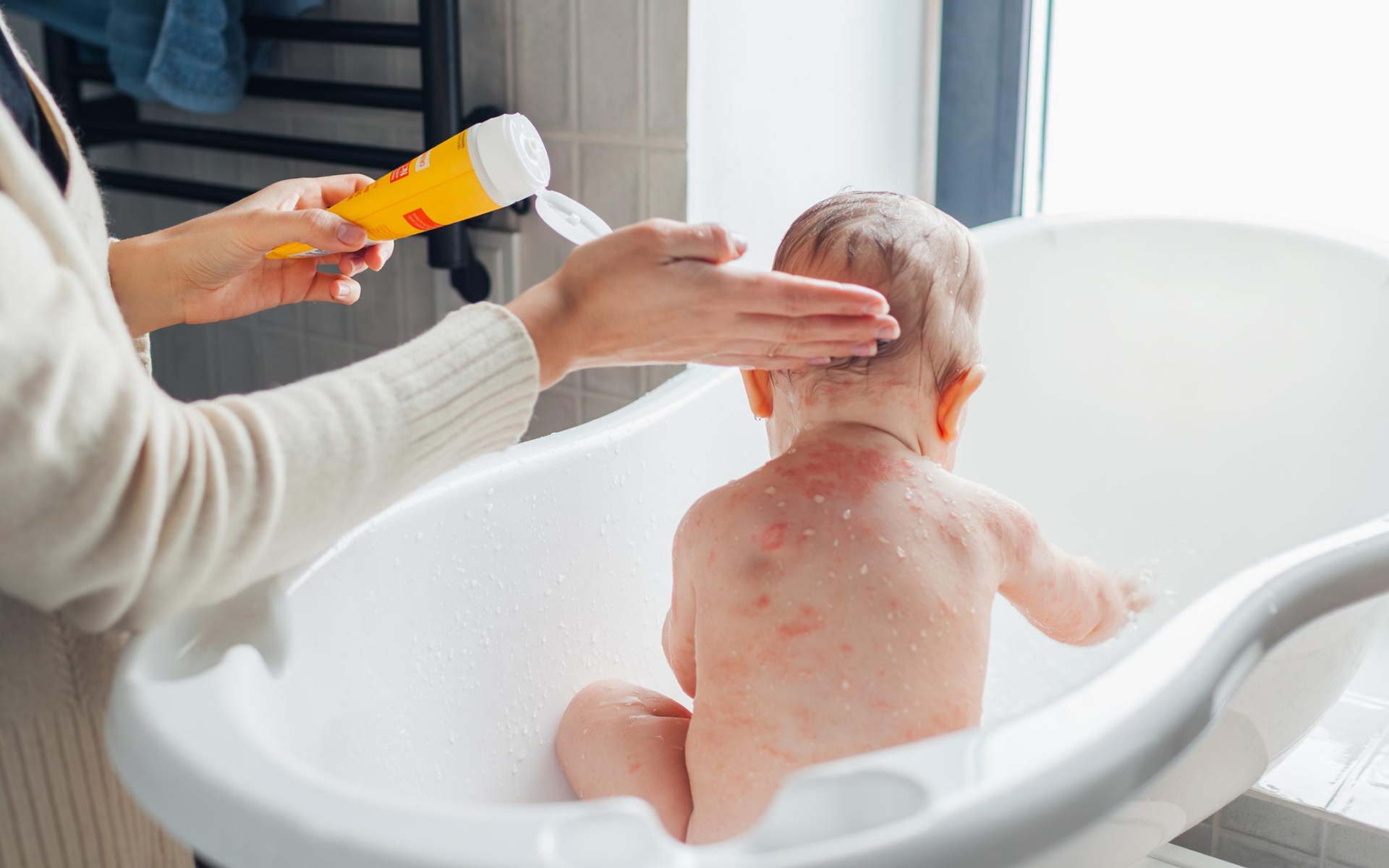
Parents may notice children scratching more at night after bath time.
It is not dramatic. It is cumulative.
Does filtered tap water help with eczema symptoms?
Filtered tap water is not a medical treatment. It will not cure eczema.
But reducing daily exposure to potential irritants - like chlorine and certain impurities - may help support calmer, more comfortable skin.
Think about it. Your family’s skin is exposed to this water:
-
When you wash hands
-
When you rinse faces
-
During every bath and shower
That is a lot of contact.
A quality filter can help:
-
Reduce chlorine
-
Reduce sediment and some impurities
-
Create gentler-feeling water on the skin
For eczema-prone households, that can be one practical step in a broader skin care plan.
Why families are looking at bath and tap filters

You can see the impact of hard water on taps. Now imagine what it may be doing to delicate skin.
More families are choosing targeted solutions rather than installing expensive whole-house systems. A bath or tap filter focuses on the water that actually touches your skin.
For example, the Lushi bath water filter is designed to be installed where your child’s bath water runs - supporting a gentler bathing routine without renovating your entire plumbing system.
It is a small change. But when you are managing eczema, small changes matter.
What are the advantages of filtered water with Lushi Filter?

Let’s keep this practical.
1. It supports your skin barrier
By reducing chlorine and certain impurities, filtered water may feel less harsh. That can help:
-
Reduce that tight, squeaky-clean feeling
-
Support moisture retention
-
Make your moisturiser work more effectively
2. It is easy to install
No plumber required. Most families can install it in minutes. Which is good, because no family wants another complicated project.
3. It fits into your existing routine
You still:
-
Use your prescribed creams
-
Follow medical advice
-
Moisturise consistently
You are simply improving the water quality at the source.
And when the cartridge needs replacing, you can order the Lushi filter refill cartridge to keep your system working properly.
How to know if water might be affecting your child’s eczema
Here are a few questions to ask yourself:
-
Does their skin feel worse after swimming or bathing?
-
Do you live in a known hard water area?
-
Is there visible limescale on your taps?
-
Does moisturiser seem to sit on top of the skin rather than absorb?
If you answered yes to a few of those, water quality could be worth exploring.
Practical steps for managing eczema at home
Here is a simple, realistic checklist.
Step 1 - Check your water hardness
Look up your local water supplier’s information or use a home test kit.
Step 2 - Simplify bath time
-
Keep baths lukewarm
-
Limit soaking time
-
Use soap-free cleansers
Step 3 - Consider filtered tap water
Adding a filter at the tap or bath is a manageable step that does not involve major expense.
Step 4 - Moisturise within three minutes
Lock in hydration while skin is still slightly damp.
Consistency wins here. Not perfection.
A quick comparison

Expert insight
Dermatology experts consistently highlight the importance of protecting the skin barrier in eczema management. Environmental factors - including water quality - can influence how well that barrier functions.
As referenced by leading eczema organisations, hard water exposure has been associated with increased eczema risk and flare-ups in predisposed individuals.
That tells us one thing clearly:
Daily environmental exposure matters.
So, does filtered tap water help with eczema symptoms?

For many families, yes - it can help reduce one everyday irritant.
It will not replace medical care. But it can support it.
When you think about how often your child’s skin is exposed to water, improving that water quality becomes a logical step - not a luxury.
You would not wash their face with something that stings. Why settle for water that feels harsh?
Final thoughts
If you are managing eczema in your household, you are already doing a lot.
Filtered tap water is not a miracle. But it is a practical, empowering change you can control.
Less irritation. Gentler baths. Fewer what-is-causing-this flare-up moments.
If you are ready to explore a more skin-friendly bathing routine, learn more about the Lushi system here:
Because when it comes to your family’s skin, small, thoughtful changes add up.


Leave a comment
This site is protected by hCaptcha and the hCaptcha Privacy Policy and Terms of Service apply.